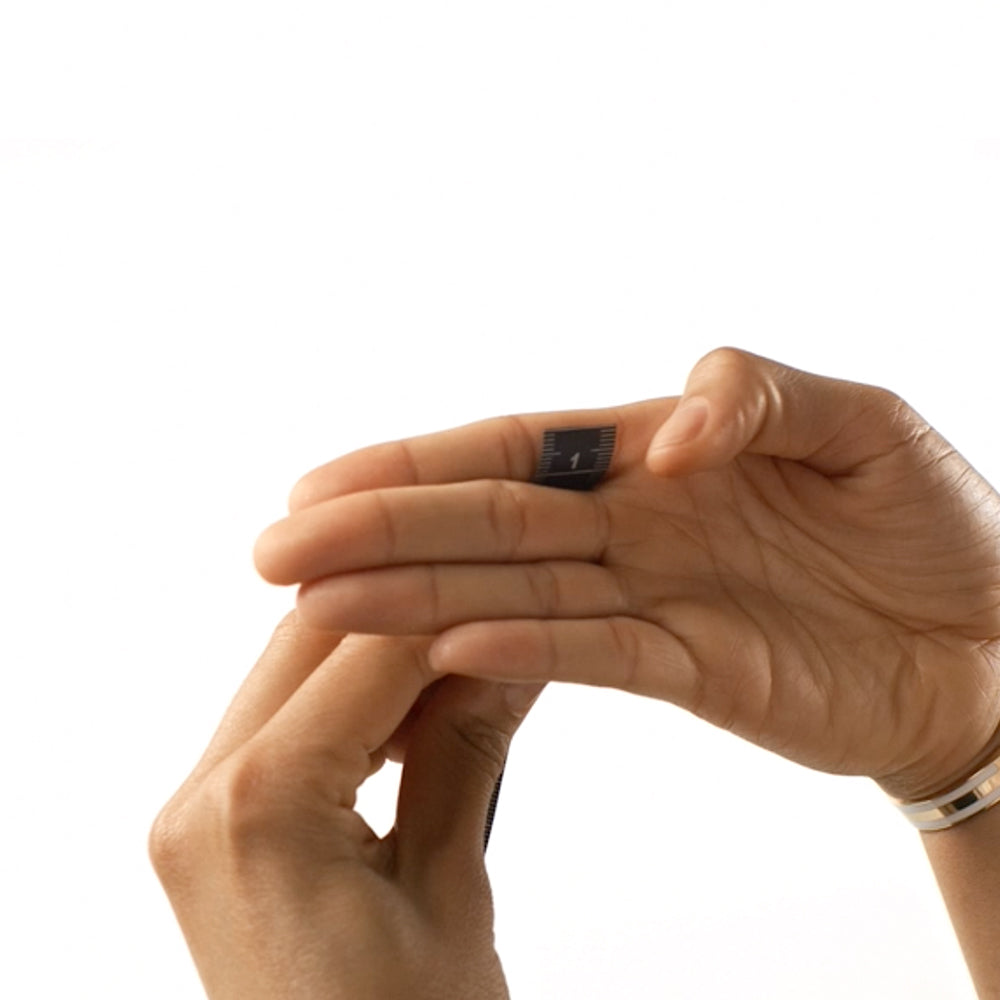
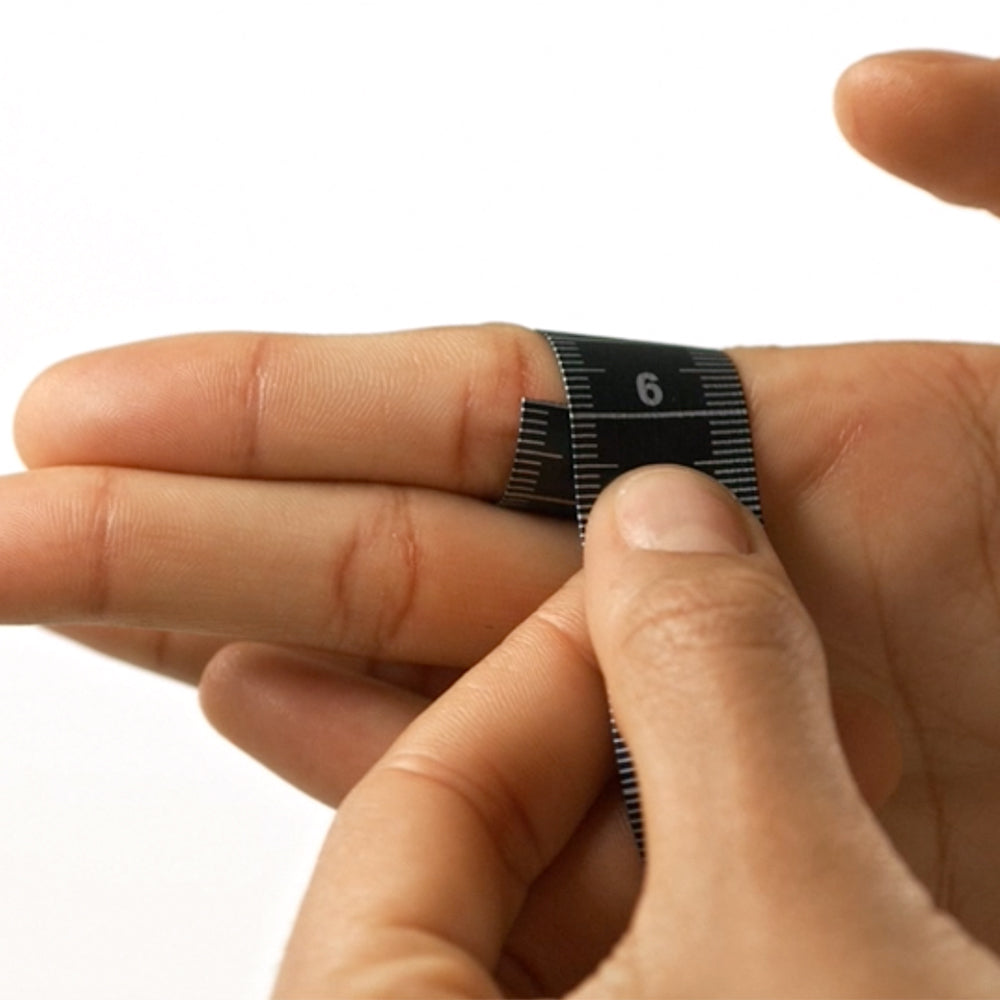
1. To measure your finger, gently wrap the measuring tape around the base of your finger. Ensure it’s snug but not too tight, allowing for a comfortable fit without squeezing. If you’re using a piece of string or a strip of paper instead, mark the point where the end meets the rest of the material. Your ring needs to fit over your knuckle, which is often the widest part of your finger. Therefore, to ensure a comfortable fit, measure both the base of your finger and around your knuckle. If your knuckle is significantly larger than the base of your finger, consider using the average of these two measurements. This way, your ring will fit comfortably over the knuckle but not be too loose at the base.

2. Next, record the measurement. If you are using a measuring tape, directly read the measurement from the tape at the point where it overlaps. If you are using a string or paper, lay the marked string or paper flat on a surface and measure its length with a ruler. Ensure the ruler is placed straight and the string or paper is not stretched, as this could lead to inaccurate measurements.

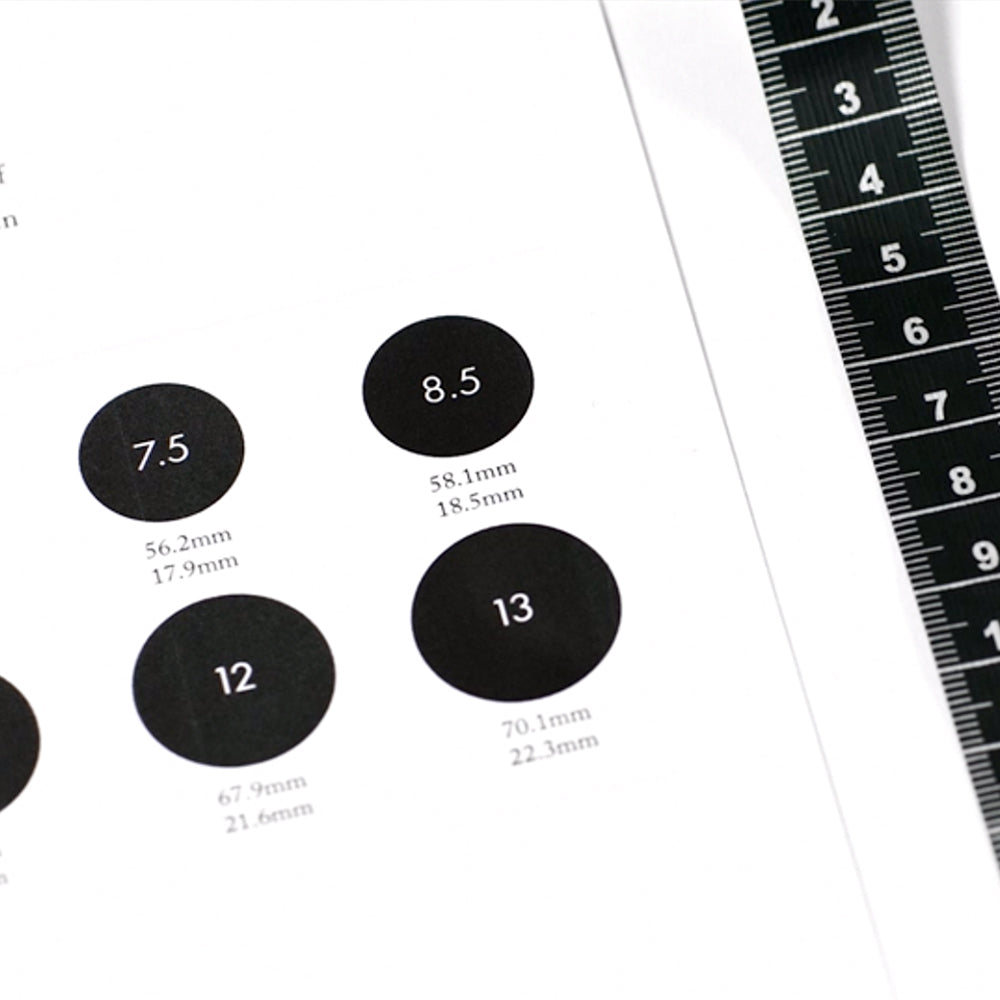
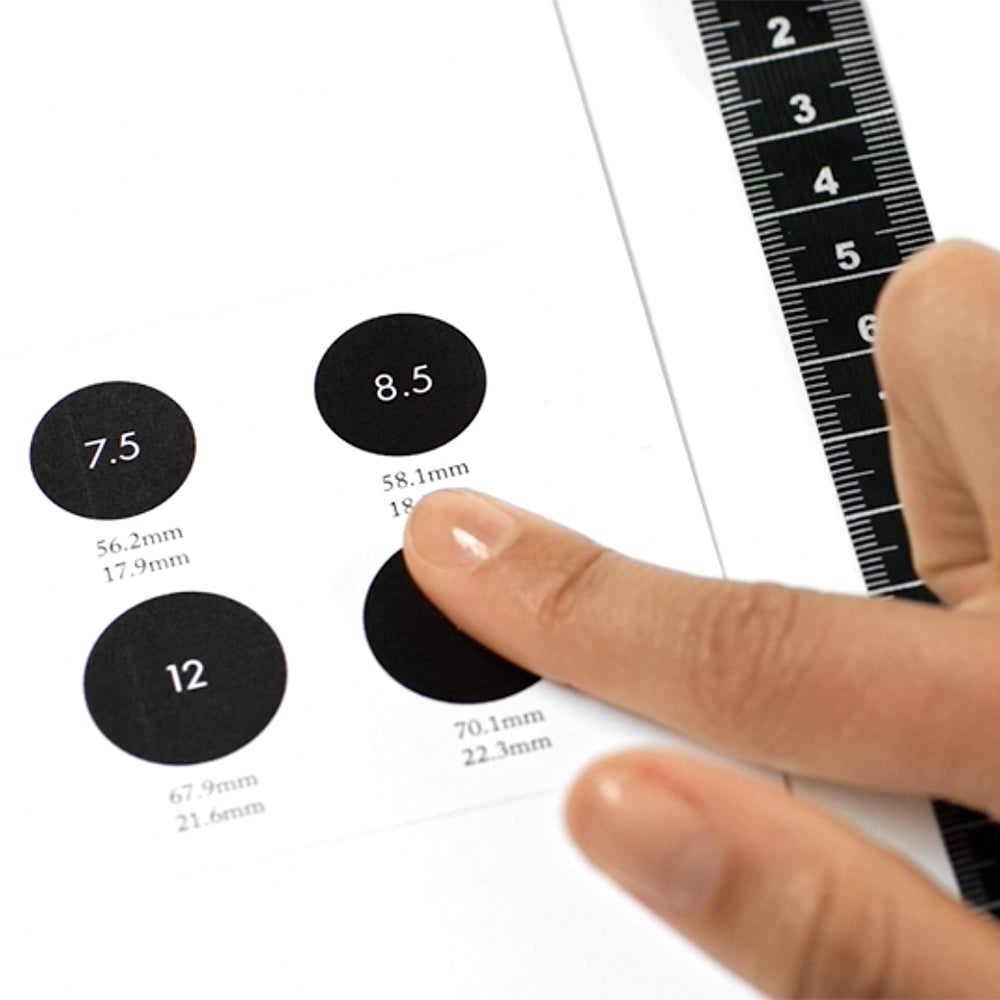
3. Then, use a ring size chart to convert your measurement to the corresponding ring size. Ring size charts are easily available online and typically include sizes for different regions, such as the US, UK, and Europe. Be sure to select the correct chart for your region to avoid any discrepancies. The chart will match your measurement to a specific ring size, making it easy to find the right fit.

4. It's important to consider the dominant hand factor when measuring your ring size. The same finger on your left and right hands may differ slightly in size. Typically, the dominant hand—the one you use more frequently—might be slightly larger due to increased muscle development and usage. Therefore, measure the specific finger on the hand you plan to wear the ring. This ensures a more accurate fit, as even minor differences can affect the comfort and security of the ring.

1. Measure with printed PDF

2. Measure with PDF on Mobile

3. Measure with cut-out-ruler

If you don't have a ring size chart or
measuring tape, you can still measure your ring size accurately with just a
ruler. Here's how: Take a flexible, non-stretchy string or strip of paper, wrap
it around the base of your finger, and mark where it overlaps. Lay it flat and
measure the length in millimeters. Use an online ring size chart to find your
size, accounting for regional differences. For wider bands, consider going up
half a size for comfort. Repeat this process at different times of the day for
the best fit. For a step-by-step visual guide, check out our YouTube video
guide.

4. Measure with measuring tape

To ensure accurate ring size measurement with
a string, make sure it fits comfortably around your finger—neither too tight
nor too loose. A tight string may lead to an overly snug ring, while a loose
one might cause the ring to slip off. After marking and measuring the string,
compare your measurement with multiple ring size charts for consistency. For
better precision, use a minimally stretchy material like embroidery floss.
Double-check your measurements at different times of the day to account for finger
size fluctuations. For a step-by-step guide, check out our YouTube video
tutorial.

Tabella per le misure degli anelli

Le tabelle per le misure degli anelli ti aiutano a trovare la misura giusta confrontandola con dimensioni standardizzate in diverse regioni. Paesi diversi usano sistemi di misura diversi, quali numeri negli Stati Uniti e in Canada, lettere nel Regno Unito e circonferenze in millimetri in Europa. Queste variazioni esistono a causa di differenze storiche e di misurazione, quindi una misura in un Paese potrebbe non corrispondere alla stessa altrove. Quando acquisti anelli a livello internazionale, usa una tabella per le misure degli anelli per convertirla tra i vari sistemi e assicurarti una vestibilità perfetta. Usa il misuratore di anelli qui sotto per confrontare le taglie tra i Paesi.  

US/Canada 

UK/Australia 

Europe 

Japan 

Switzerland 

4.0 

H 

46.5 

7 

7.75 

4.5 

I 

48.0 

8 

8.5 

5.0 

J 

49.0 

9 

9.25 

5.5 

K 

50.3 

10 

9.75 

6.0 

L 

51.5 

11 

10.25 

6.5 

M 

53.1 

12 

11.0 

7.0 

N 

54.4 

13 

11.75 

7.5 

O 

55.7 

14 

12.25 

8.0 

P 

57.0 

15 

13.0 

8.5 

Q 

58.3 

16 

13.5 

9.0 

R 

59.5 

17 

14.25 

9.5 

S 

60.8 

18 

15.0 

10.0 

T 

62.1 

19 

15.75 

10.5 

U 

63.4 

20 

16.25 

11.0 

V 

64.6 

21 

17.0 

11.5 

W 

65.9 

22 

17.75 

12.0 

X 

67.2 

23 

18.25 

12.5 

Y 

68.5 

24 

19.0 

13.0 

Z 

69.7 

25 

19.75 

13.5 

Z+1 

71.0 

26 

20.25 

14.0 

Z+2 

72.3 

27 

21.0 

14.5 

Z+3 

73.6 

28 

21.75 

15.0 


74.8 

29 

22.5 


Misura dell'anello in cm o pollici

Negli Stati Uniti e in Canada, le misure degli anelli sono numeriche e non corrispondono direttamente a pollici o centimetri. Le dimensioni derivano dalla circonferenza interna o dal diametro dell'anello, ma i numeri delle misure fanno parte di una scala standardizzata.

Nel Regno Unito e in Australia, le misure degli anelli usano un sistema alfabetico (ad es., H, I, J) piuttosto che essere legate a misure in pollici o centimetri. Simile al sistema statunitense, queste misure corrispondono a specifiche circonferenze interne o diametri, ma le lettere stesse fanno parte di una scala unica.