
使用捲尺是確定戒指尺寸的最佳和最準確的方法。為了獲得最佳效果,請確保留出足夠的空間來容納您的指關節。請記住,白天手指的大小會因溫度和濕度等多種因素而變化。因此,建議在一天結束時測量您的手指,此時手指可能最大。此外,同一根手指的左手和右手戒指尺寸可能不同,請務必測量您打算戴戒指的手指的
如何測量您的戒指尺寸
Die richtige Ringgröße zu ermitteln ist entscheidend für einen bequemen und sicheren Sitz. Folgen Sie den unteren Schritten
, um Ihre Fingergröße genau zu messen.
Sammeln Sie zuerst all Ihre Hilfsmittel. Ein flexibles Maßband ist ideal, aber wenn Sie keines haben, reicht auch ein Stück Schnur oder Papierstreifen zusammen mit einem Lineal. Wenn Sie diese Hilfsmittel verwenden, brauchen Sie auch einen Marker oder Stift, um die Schnur oder das Papier zu markieren. Einen Ringgrößen-Umrechner, den Sie leicht online oder in Schmuckgeschäften finden, ist ebenfalls hilfreich.
Das Timing bei der Messung ist entscheidend. denn Ihre Finger können im Laufe des Tages aufgrund von Hitze, Luftfeuchtigkeit und körperlicher Aktivität anschwellen oder schrumpfen (Lesen Sie unten weiter). Für die genaueste Messung sollten Sie am Ende des Tages messen, wenn der Finger tendenziell am größten ist.
Mit einem Maßband
Notieren Sie die Maße in Millimetern und verwenden Sie die Vergleichstabelle oder den Messleitfaden im PDF-Format, um Ihre Ringgröße zu finden.
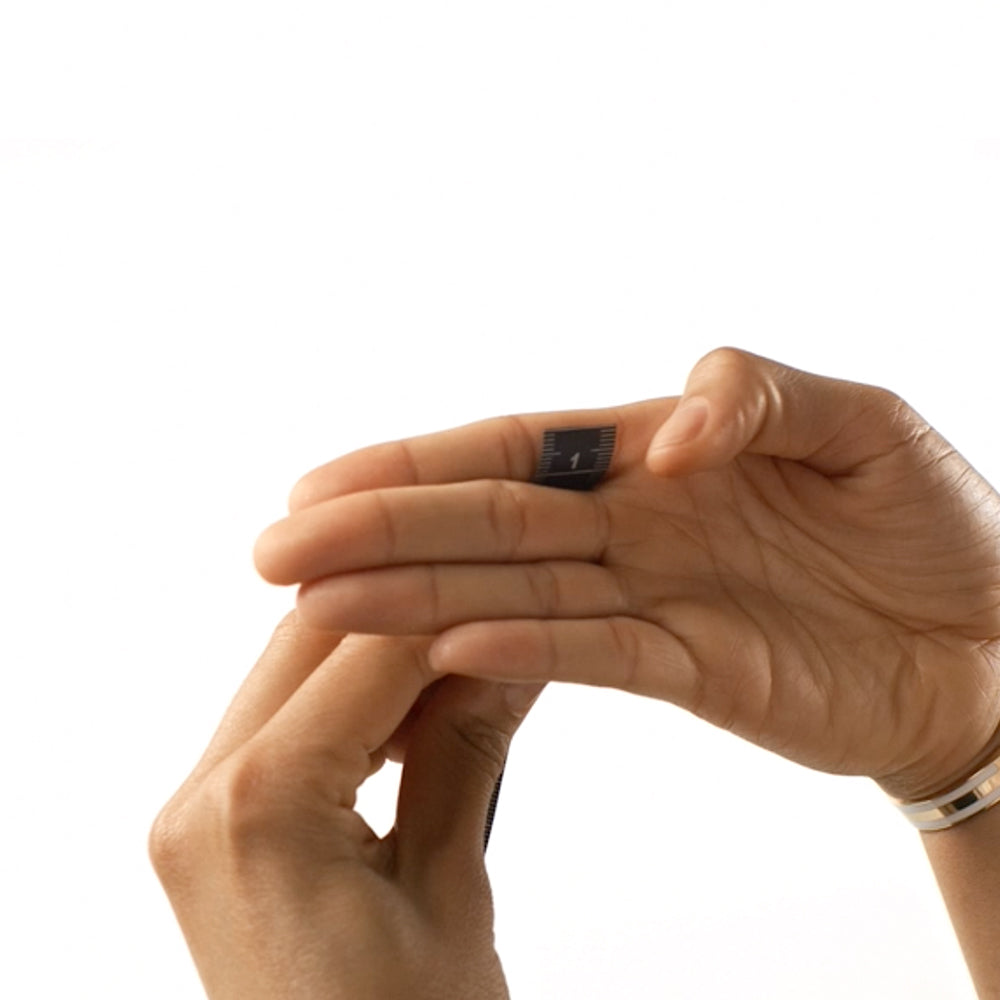
1. To measure your finger, gently wrap the measuring tape around the base of your finger. Ensure it’s snug but not too tight, allowing for a comfortable fit without squeezing. If you’re using a piece of string or a strip of paper instead, mark the point where the end meets the rest of the material. Your ring needs to fit over your knuckle, which is often the widest part of your finger. Therefore, to ensure a comfortable fit, measure both the base of your finger and around your knuckle. If your knuckle is significantly larger than the base of your finger, consider using the average of these two measurements. This way, your ring will fit comfortably over the knuckle but not be too loose at the base.
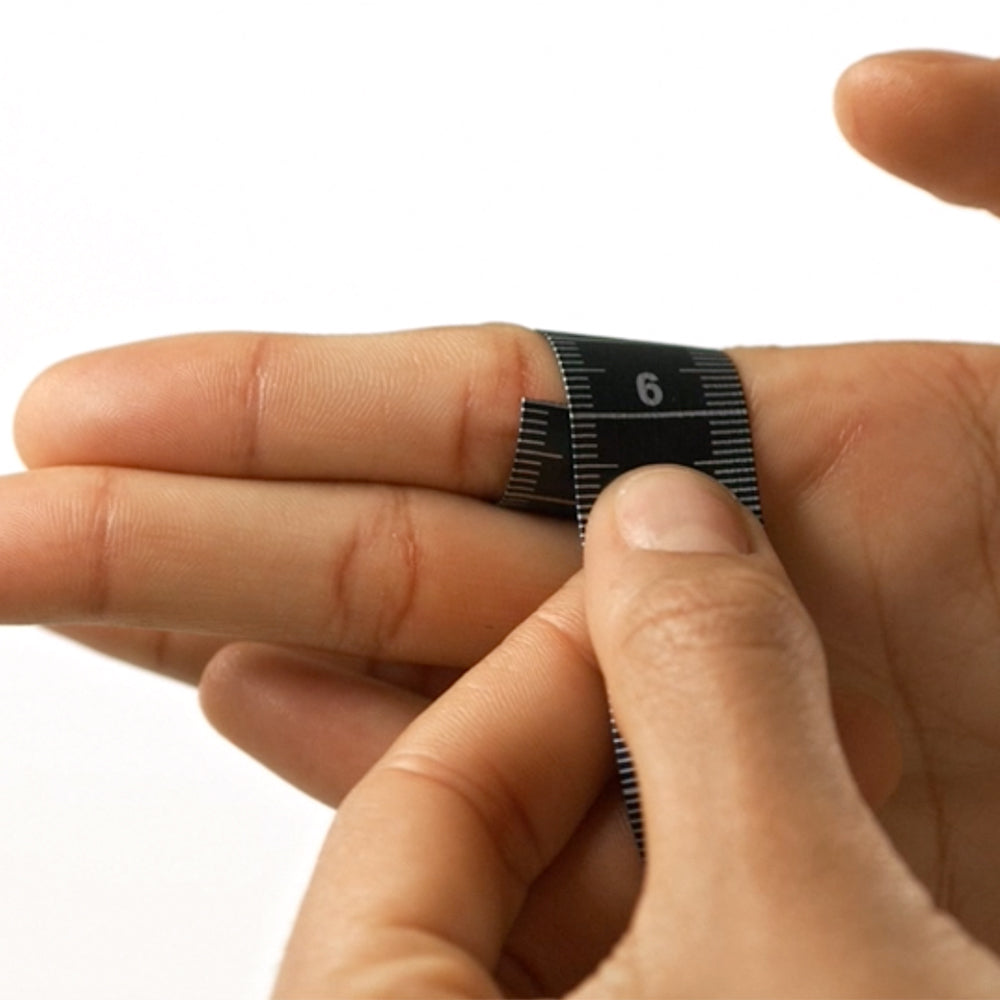
2. Next, record the measurement. If you are using a measuring tape, directly read the measurement from the tape at the point where it overlaps. If you are using a string or paper, lay the marked string or paper flat on a surface and measure its length with a ruler. Ensure the ruler is placed straight and the string or paper is not stretched, as this could lead to inaccurate measurements.
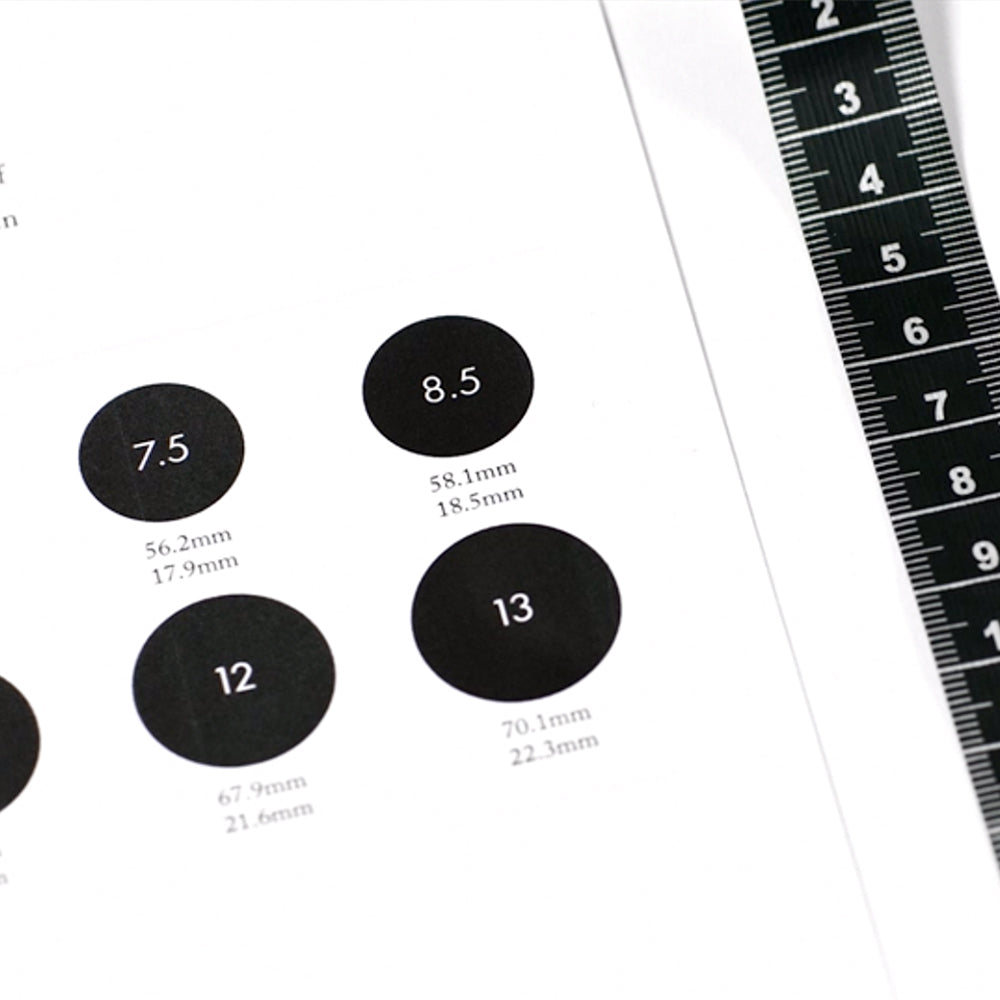
3. Then, use a ring size chart to convert your measurement to the corresponding ring size. Ring size charts are easily available online and typically include sizes for different regions, such as the US, UK, and Europe. Be sure to select the correct chart for your region to avoid any discrepancies. The chart will match your measurement to a specific ring size, making it easy to find the right fit.
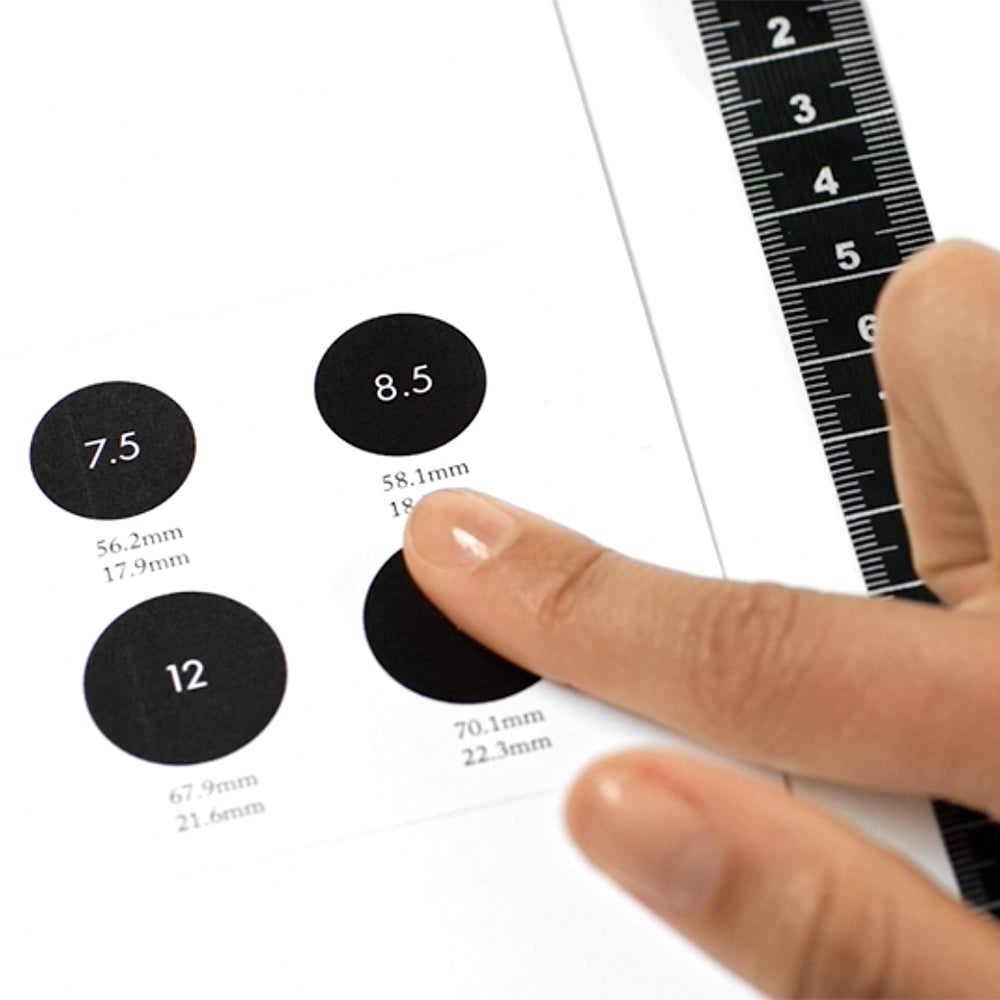
4. It's important to consider the dominant hand factor when measuring your ring size. The same finger on your left and right hands may differ slightly in size. Typically, the dominant hand—the one you use more frequently—might be slightly larger due to increased muscle development and usage. Therefore, measure the specific finger on the hand you plan to wear the ring. This ensures a more accurate fit, as even minor differences can affect the comfort and security of the ring.
1. Mit ausgedrucktem PDF messen
2. Messen Sie mit PDF auf Mobilgeräten
3. Mit einem Lineal
Wenn Sie keinen Ringgrößenumrechner oder ein Maßband haben, können Sie dennoch Ihre Ringgröße genau mit einem Lineal messen. So funktioniert's: Nehmen Sie eine Schnur oder einen Papierstreifen, wickeln Sie ihn um Ihren Fingers und markieren Sie, wo er sich überlappt. Legen Sie den Papierstreifen flach und messen Sie die Länge in Millimetern. Verwenden Sie eine Online-Ringgrößentabelle, um Ihre Größe zu finden, wobei Sie regionale Unterschiede berücksichtigen sollten. Für breitere Bänder sollten Sie eine halbe Größe größer wählen, um extra Komfort zu gewährleisten. Wiederholen Sie diesen Vorgang zu verschiedenen Tageszeiten für die beste Passform. Für eine Schritt-für-Schritt-Anleitung schauen Sie sich unser YouTube-Video an.
4. Mit einem Stück Schnur
Um die Ringgröße genau mit einer Schnur zu ermittlen, vergewissern Sie sich, dass die Schnur bequem um Ihren Finger passt—also weder zu fest noch zu locker sitzt. Eine enge Schnur kann zu einem zu engen Ring führen, während eine lockere Schnur dazu führen kann, dass der Ring abrutscht. Nach dem Markieren und Messen der Schnur vergleichen Sie Ihre Messung mit mehreren Ringgrößen-Umrechnern. Für eine genauere Passform verwenden Sie ein minimal dehnbares Material wie Stickgarn. Überprüfen Sie Ihre Messungen zu verschiedenen Tageszeiten, um Schwankungen in der Fingergröße zu berücksichtigen. Für eine Schritt-für-Schritt-Anleitung sehen Sie sich unser YouTube-Video an.


